For more than 15 years, roller skating has been an incredible outlet for movement, music, healing, and community. Even though I haven’t been able to skate as much lately, roller skating continues to inspire me. In fact, reflecting on its history and much of the creativity behind it has provided a small spark toward a creative project I’m excited to share with you now.
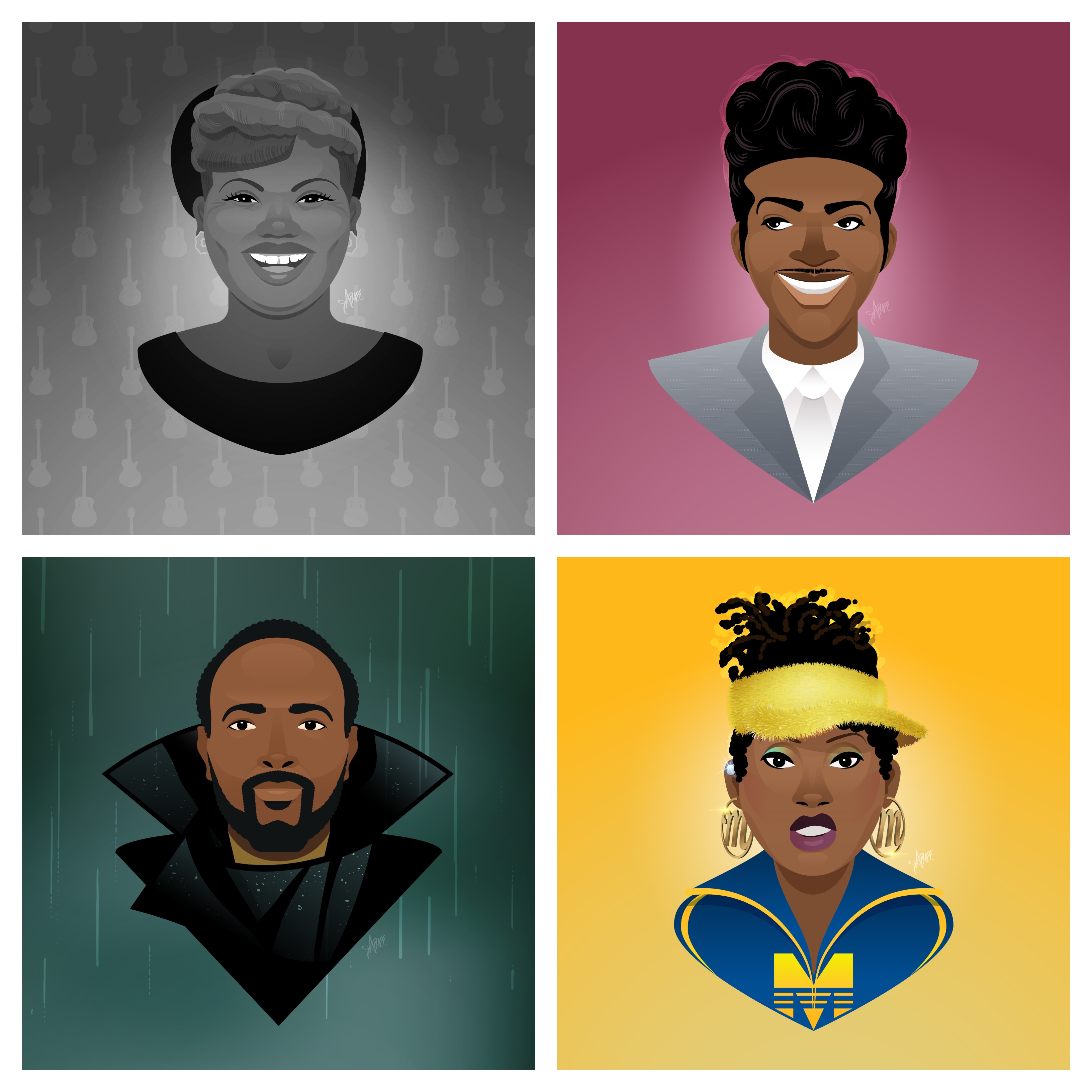
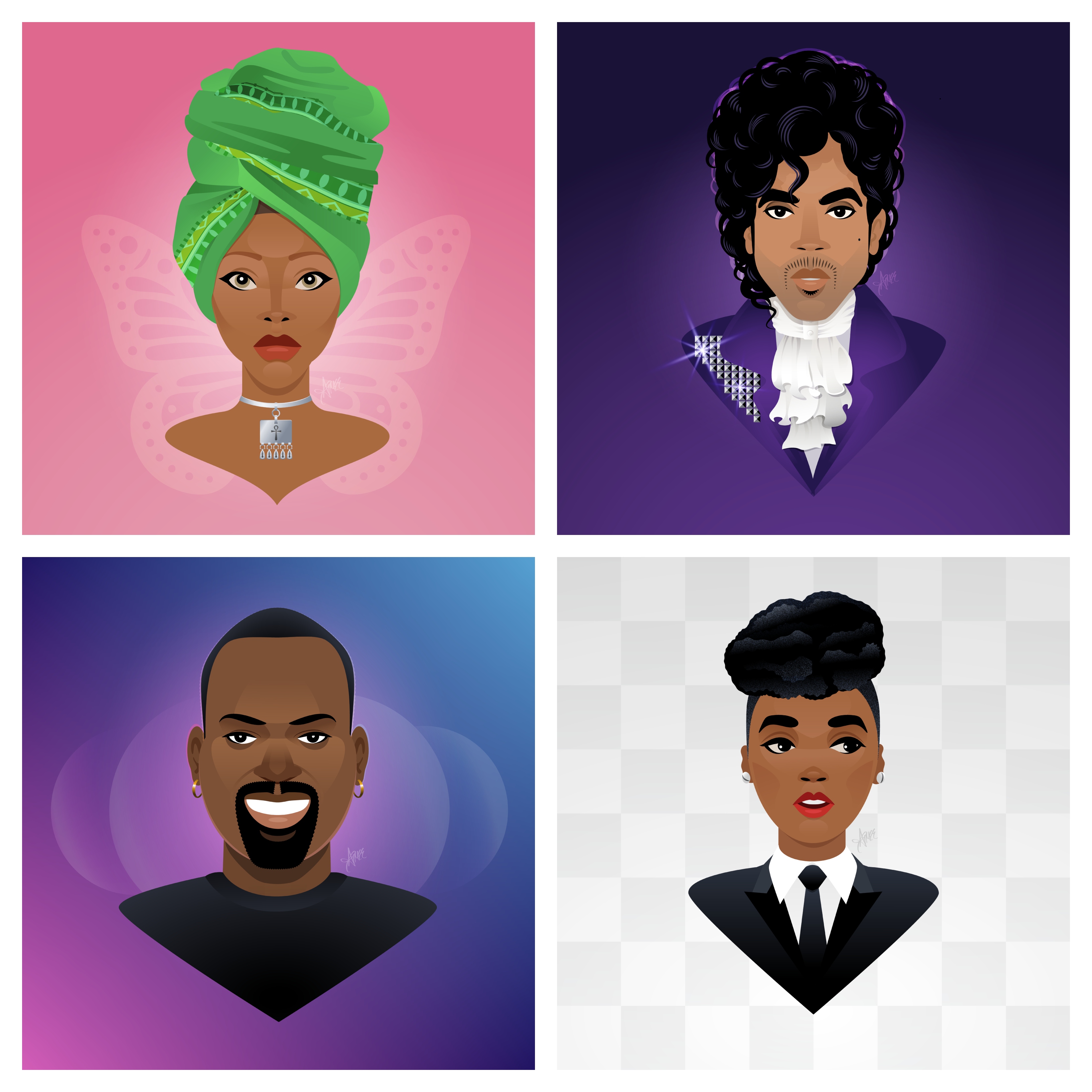
Portraits of Excellence is a living, digital illustrated tribute that celebrates the vital role of Black artistry in shaping American culture. Blending the playful charm of Saturday morning cartoons with the timeless nobility of classical Greek busts, each original portrait spotlights a Black icon whose influence continues to shape culture today.
Roller skating alone carries a huge history of Black creativity that’s influenced everything from dance to popular music:
If it wasn’t for a black man, Bill Butler, we’d all likely still be skating to organ music at the local rink.
Since the 2020 Co-vid pandemic, many new skaters have discovered quad skating outdoors. However, one of the countries’ longest-running advocates for outdoor roller skating is a black man, David Miles Jr. out of San Francisco, CA.
There are countless stories like this across music, science, politics, business, and beyond. So much of the things we take for granted in our daily lives; music, style, language, and more, has roots in Black creativity. That influence deserves recognition more than just one month a year. For me, it’s always been part of my life and the culture that shaped me. And in the face of today’s political and cultural backlash, I believe amplifying this truth is vital.
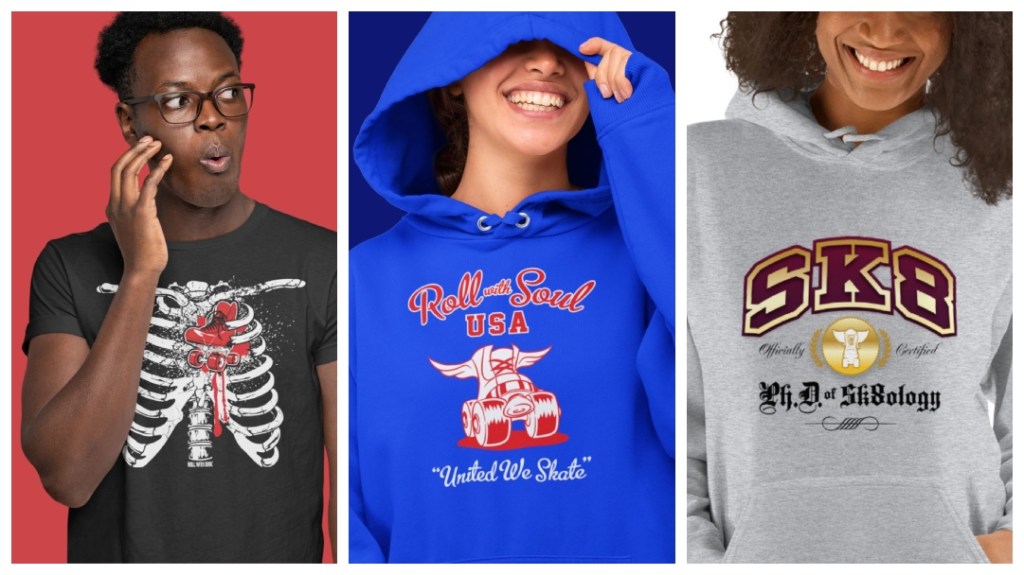
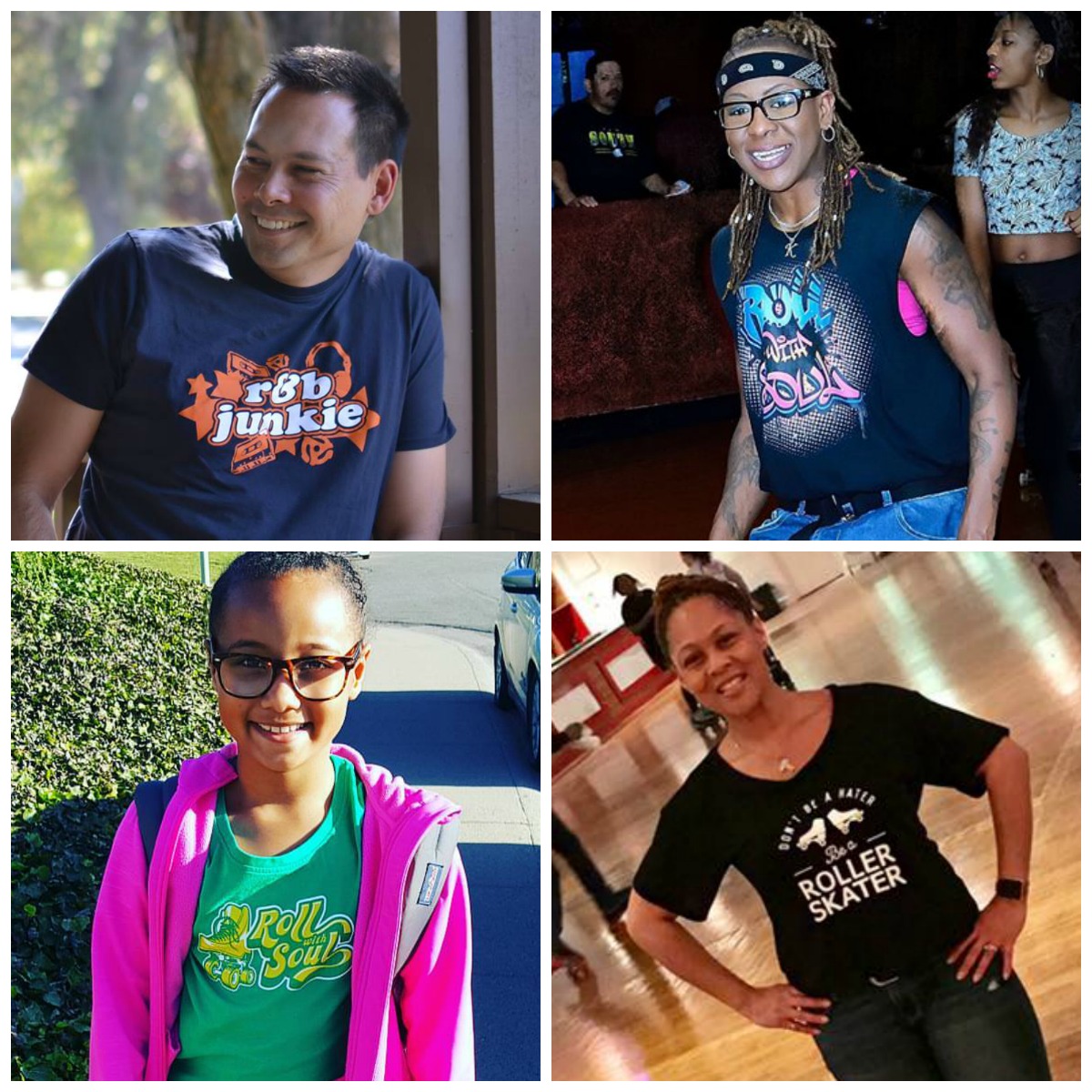
The holiday season is here, and if you’re looking for gifts that celebrate skating, fun, and fitness, Roll With Soul® has you covered. These are all original designs, created by me!
Whether you’re shopping for your skate crew or treating yourself, here are a few fun gift ideas (and someone’s new favorite shirt!).
To those participating in economic justice boycotts and spending-awareness movements, such as We Ain’t Buying It, Mass Blackout, and others. I also stand with you using your purchasing power to advocate for equity and systemic change. ✊
Did you know? In 1983, President Ronald Reagan declared October National Roller Skating Month in the United States.
Roller skating was more than just a fun pastime, it was a cultural cornerstone in Black communities, deeply connected to both civil rights and the evolution of popular music. Segregation at the rinks failed to stop the culture from thriving; in fact, Black skaters would create their own opportunities where the moves and the music would eventually impact our entire culture!
For example:
When hip hop artists were often barred from performing at mainstream venues, roller rinks welcomed them, giving the music a stage and a fanbase.
Many hit dance records were first discovered at the rink. If the skate DJs were spinning a track, it was a sign it was hot, often propelling it to radio and wider audiences.
The more you know!
This is a long read but probably one of the BEST and most comprehensive articles on the impacts of roller skating on culture. I’m so glad electronicbeats.net put it back online.
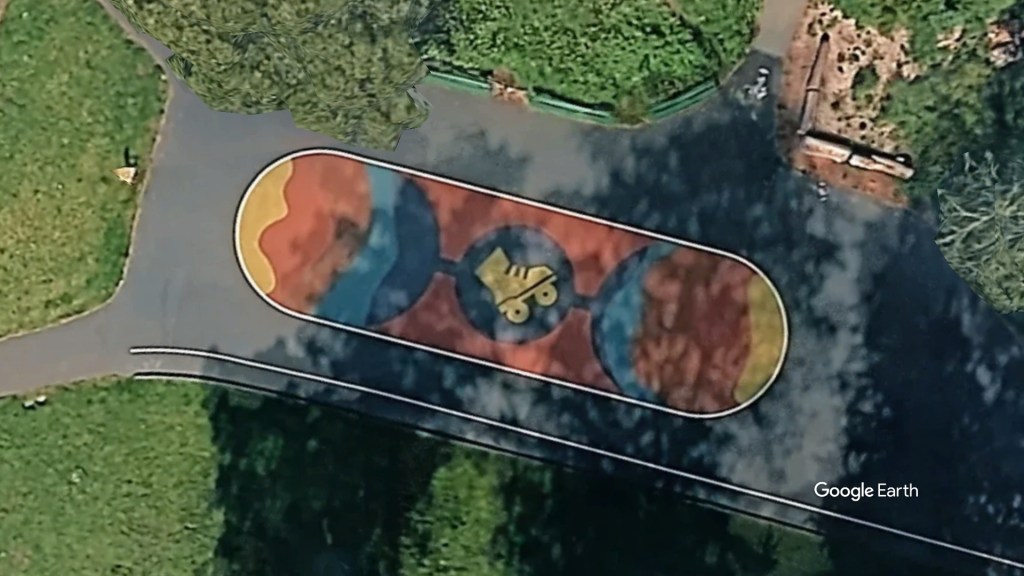
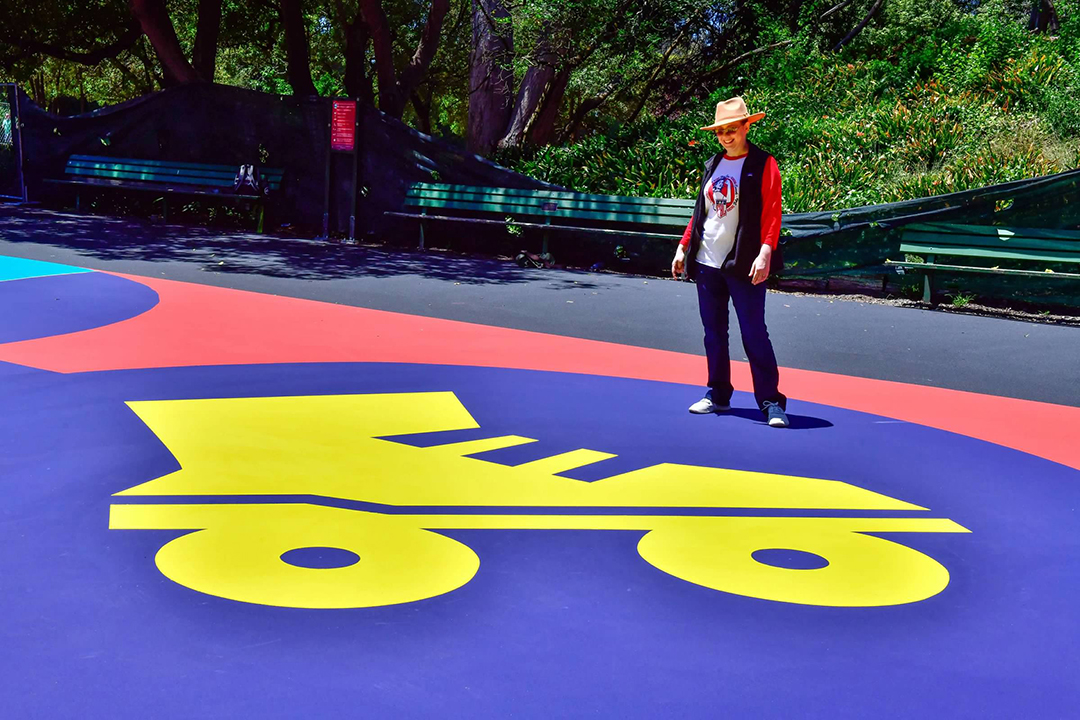
I designed this in 2022 for 6th Ave Skating Place, one of the country’s only permanent outdoor roller skating spaces. Most Sundays, it feels like a family reunion: music, movement, and generations together on wheels.
Fun fact: The mural wasn’t painted. It was built using colored asphalt to preserve the smooth surface skaters need, while also ensuring durability. That technical feature shaped the minimalist design.
It’s pretty cool to know this piece is now visible from orbit. Welcome alien overlords!
If you’re visiting San Francisco, make sure to stop by!
I started my Roll with Soul® apparel brand around 2013 because there was little to no representation in contemporary roller skating apparel outside of aggressive derby slogans or cutesy, retro aesthetics.
As a former professional apparel designer in the music industry, I wanted to make high-quality roller skate themed designs available for people who skate outside those margins.
Since then, there’s been some wonderful growth in this space, so I want to showcase some incredible black-owned roller skate apparel brands that are creating some of the coolest, authentic skate fashions out there!!
Rolling away from social platforms that profit from hate and exploitation – future updates at RollWithSoul.com
Dear Friends and Skate Fam,
After over a decade of connecting with you all and sharing the incredible talent and joy of the roller skating community on social media, I’ve made the decision to step away from social platforms like Meta and Twitter. I can no longer ignore the dangerous ethical failings of the spineless billionaires who massively profit from spreading hate and misinformation while exploiting our creativity and invade our privacy through these platforms.
But this isn’t a goodbye. I’ll be focusing my future energy creating and sharing here on rollwithsoul.com
I’m also embarking on a new personal project related to my illustration/artwork. I hope you’ll sign up for my newsletter and be a part of the journey here: portraitsofexcellence.com
Thank you for the support and love over the years. See you at the rink!
The refrain of “Why does it matter?” from some white skaters has been echoing across social media lately, often dismissing reminders of black roller skating culture and its creators. It’s essential to understand the significance of preserving accurate roller skating history and the far-reaching consequences of this problematic reaction.
We know that skating has existed for hundreds of years and has taken on many forms. But we need to acknowledge that the people being celebrated on TikTok right now aren’t typically skating like Olympic figure skater Nancy Kerrigan, they are skating more like Bill Butler, a black man who played a huge role in giving roller skating its modern flavor, and popularity – but is largely unknown to most.
So, let’s talk about why it’s easy for some of us to take this issue for granted.
The Significance of Names & Creators
Dismissing the importance of named routines, techniques, creators, and history erases the experiences and contributions of black skaters who have nurtured this activity and culture decades before the 2020 pandemic.
When their creative work is changed or relabeled to appease or appeal to different audiences without their input, it impacts their ability to receive the recognition, opportunities, and financial compensation they deserve.
Sometimes Black skaters are even forced to perpetuate the altered versions in order to preserve the small amount of opportunity that is available to them, which sadly makes the problem worse.
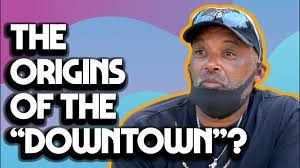
Screenshot from a video picturing Rollerdance Man Richard Humphrey with the title: “The origins of the Downtown?” The video attempts to clarify the true name and creator of these foundational roller dance moves. The video was produced by a popular skating company who built an entire brand from a whitewashed version of roller skating.
Of course, extensive knowledge of skate history isn’t necessary for a fun day at the rink or the park, but being open to corrections about misinformation is important, especially when creating media content or sharing views that may be inaccurate. I think we all know that misinformation spreads like wildfire and rarely gets corrected in the fast-paced world of social media.
Lastly, it’s not our place as white skaters to dictate the history that makes us most comfortable. We should listen, learn, and show respect for the origins and contributions of black skaters if we are to participate in and emulate the culture and moves that they have created.
Disparity in Media Visibility
“Why isn’t there a dedicated book on this topic if names and history are so important?” This repeated question reveals the glaring disparity in media visibility between black and white skaters.
Despite their skills, black skaters often receive less recognition compared to their white counterparts. This perpetuates the cycle of erasure and undermines the talents of black skaters.
One significant book exception was Bill Butler’s “Jammin”, which was published in 1979 during the peak of roller skating’s “disco” mainstream popularity. It’s been out of print for decades and is now considered a rare collectible.
The lack of published material about black roller skating can be largely attributed to limited opportunities and resources for black skaters to produce materials with the same marketing power and reach as major publishers or platforms.
Despite this challenge, there has been a growing movement for black skaters to create and self-publish materials that document and celebrate roller skating culture.
Documentaries to Watch:
8 Wheels and Some Soul Brotha’ Music (2008)
Roller Dreams (2017)
United Skates (2018)
Books:
Rollerdanceman: The Biography of Richard Humphrey, by Carla Dometrius
The Motown Sound On Wheels: Rockin Richard Houston
The Evolution of Skating: Sk8rz Passion, Our Journey, by Amirah Palmer, Richard Humphrey, David Miles
The information is out there, but it may not be where you are used to looking.
Supporting Authenticity in the Age of Faux “Influencers”
In the era of social media, it’s important to look more closely at the authenticity and authority of skating “influencers”. Before considering someone an “expert”, confirm their involvement in the skating community as well as their actual skills and experience.
Black skaters played a significant role in creating the unique styles and moves that have made skating so popular. So, it’s disheartening to see people, especially white skaters, appropriating the creations of those skaters while centering themselves for attention, validation, and monetary gain on social media.
Let’s be honest here. We all know that people prefer to watch catchy videos than to read lengthy captions full of history facts. However, if you find yourself actively exploiting this viewer behavior for your personal gain, take a moment and reflect on your motives as well as the creators you may be harming.
Also note that media exposure doesn’t always equate to actual skill or influence. Supporting those who genuinely contribute to the growth and preservation of roller skating culture ensures that authentic voices are recognized and celebrated.
Look closely and you’ll see who is contributing TO the culture, and who is merely taking FROM it.
Moving Beyond Colorblindness
When white skaters respond with the assertion that “It doesn’t matter, roller skating is for everyone,” it reflects a form of “colorblindness.” This mindset assumes all experiences and contributions are equal and interchangeable, and dismisses the historical context that shaped popular roller skating as well as the issues that still persist today.
Advocating for historical accuracy and acknowledging black creators does not exclude anyone from participating in or enjoying roller skating. Instead, it aims to address systemic imbalances and give credit where it is due.
By acknowledging, respecting, and amplifying the true cultural origins of roller skating, we can start to right some of the wrongs that previously kept diverse voices and experiences from being highlighted and celebrated.
My friend Arlan Hamilton, once said, “Be yourself so that the people who are looking for you can find you.”
I think there’s probably no shortage of relevant quotes on this topic because of their inherent truth. To illustrate further, I’d like to share a personal story about roller skating.
“Skate Free or Die,” was the lifelong motto of Donn, a dear member of our San Francisco roller skating community. Sadly, as of 2016, he is no longer with us. Considering our ages and backgrounds, we became unlikely friends. Donn once shared this story with me about a time that he was recovering from a spinal injury. Perhaps enough time has passed that it would be ok to share with you now in his honor.
“One night, about 3 years ago … I showed up at Redwood City Skate. I was fresh off of a spinal injury that left me permanently without feeling in my left leg and foot. I could barely still roll – but I had not given up hope. I was struggling to skate that night … until I noticed you in the middle towards one end – doing your thing. And I thought – she’d never believe me if I told her I used to be able to skate (something) like that! But watching you made those ‘feelings’ come alive again – I could ‘feel’ what it felt like to skate that way … and wanted to do it again, no matter what. Quite the inspiration – you were certainly that night.
Look at me now – and all that I have regained since that night … and tell me: how does one repay that kind of debt? I owe you something that will be difficult to ever repay directly.
So … please forgive me for treating you like family – I consider you my Sister. And thank you for being you!”
Over next few years Donn attended more skate parties and put in more skate party miles than I ever have. You could always find him smiling and in the groove wherever there was skating.
In as much as I had inspired him, he had just given me this enormous gift that I will never forget. It’s one of the things that drives me to share my love of skating with others. Skating is a positive force, with the ability to create friendship, love and healing.
Most of the content on my pages focuses on the talented skaters I admire from our skating community. I’m usually behind the camera, but on occasion I get caught out in the wild myself!
Since I haven’t been skating much while I’ve been rehabilitating my neck, I thought I would compile some of those old clips together for fun! They are taken from around 2014 – 2019.
People sometimes ask me to teach them my “moves,” but the truth is, the MUSIC tells my feet what to do. You can definitely see that in these clips.
#ProTip Learn the fundamentals then FEEL what your body wants to do with it. ❤️🎶❤️🎶
The recent rash of headlines touting the new “TikTok roller skating trend” reminded me a lot about why I started my website and social media pages back in 2014.
I was struck by how often media coverage on roller skating was centered around white women in some strange, exclusionary form of “girl power.” I had been an avid roller skater for nearly 5 years by then. Although I am white, I didn’t look like that, and neither did the people I skated with. My intention was to use my privilege to amplify those who weren’t being seen.
Many of these articles centered skating around white influencers and erased the African-American communities that have been nurturing and elevating this activity for decades.
On top of that, some were quick to capitalize; positioning themselves as the gatekeepers of some skating “revival.” Never turning down the spotlight, they could be seen taking credit for, and profiting from, dances and skills they took from the culture, but did not create.
Both types of passive and active whitewashing send the unfortunate message that black skaters and their beloved activity didn’t really matter until white people discovered it. It also prevents black talent from receiving any media recognition or compensation.
Despite black skaters’ apparent erasure from the press, they have had some of the most significant impact on our culture.
If it wasn’t for a black man, Bill Butler, we’d all likely still be skating to organ music at the local rink.
Since Co-vid19, many skaters are just now discovering quad skating outdoors. However, one of the countries’ longest-running advocates for outdoor roller skating is a black man, David Miles Jr. out of San Francisco, CA.
Even the film makers of the 2018 HBO documentary “United Skates” embarked on their original journey thinking that roller skating was dying off with the last of the original New York “roller disco” skaters. They soon learned that there was a whole vibrant movement of adult roller skating they’d never heard of. To their credit, they worked tirelessly with those skaters for over 5 years to get their story told on a bigger scale.
Prior to that, Tyrone Dixon released his independent documentary, “8 Wheels and some Soul Brotha Music” in 2004 to critical acclaim. Without these films, the media has virtually ignored black roller skating culture.
In an attempt to course correct, some authors have recently taken up the cause to remind people how the roots of modern skating stem from the civil rights movement. While skating does indeed bears roots in the struggle of racism, we must not overlook the positive and joyful contributions the black community has made to modern skating culture.
When the media continues to portray skaters as majority white, retro, eye candy, or conversely when black skaters are only represented by their racial trauma, they are missing out on the cutting edge of music, dance, fashion, style, etc.
This is a vibrant and important culture still fighting racist policies, continued gentrification, and historical erasure. Black skaters deserve to have their contributions acknowledged, respected and appreciated at the forefront of cultural conversations, not as a footnote.









 White Chocolate - Roller Skating