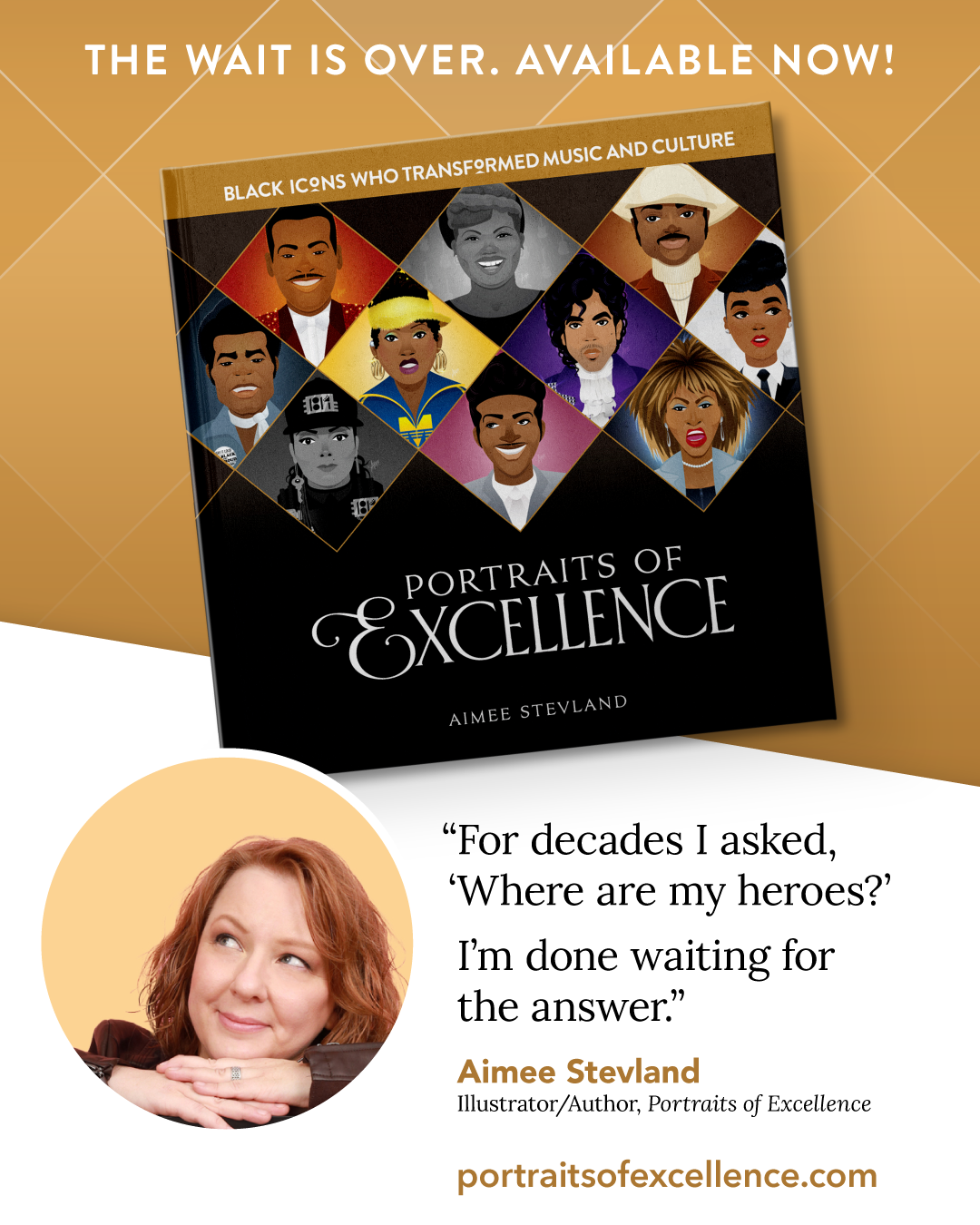
The transition from sharing my artwork online for three decades to seeing it packaged in a gorgeous physical book you can hold in your hands and enjoy feels truly surreal. I hope it finds a beloved home on your shelves or in your classrooms, lasting for generations to come.
This beautiful hardcover collection is a must-have for your coffee table or the perfect gift for the art lovers, music fans, and educators in your life who are looking for joyful imagery and a truer reflection of pop culture.
Get your copy today at portraitsofexcellence.c… and be sure to spread the word and leave a review so others can find it too!
Since stepping away from social media, sharing fun skating articles and videos isn’t as easy as it used to be. But that doesn’t mean I’ve stopped. I’ll try to share them here instead.
I had the pleasure of meeting Terrence and Ellen at Skate-a-thon a few years ago. If you live in the area, you should definitely look them up! RollTrain.com
The recent rash of headlines touting the new “TikTok roller skating trend” reminded me a lot about why I started my website and social media pages back in 2014.
I was struck by how often media coverage on roller skating was centered around white women in some strange, exclusionary form of “girl power.” I had been an avid roller skater for nearly 5 years by then. Although I am white, I didn’t look like that, and neither did the people I skated with. My intention was to use my privilege to amplify those who weren’t being seen.
Many of these articles centered skating around white influencers and erased the African-American communities that have been nurturing and elevating this activity for decades.
On top of that, some were quick to capitalize; positioning themselves as the gatekeepers of some skating “revival.” Never turning down the spotlight, they could be seen taking credit for, and profiting from, dances and skills they took from the culture, but did not create.
Both types of passive and active whitewashing send the unfortunate message that black skaters and their beloved activity didn’t really matter until white people discovered it. It also prevents black talent from receiving any media recognition or compensation.
Despite black skaters’ apparent erasure from the press, they have had some of the most significant impact on our culture.
If it wasn’t for a black man, Bill Butler, we’d all likely still be skating to organ music at the local rink.
Since Co-vid19, many skaters are just now discovering quad skating outdoors. However, one of the countries’ longest-running advocates for outdoor roller skating is a black man, David Miles Jr. out of San Francisco, CA.
Even the film makers of the 2018 HBO documentary “United Skates” embarked on their original journey thinking that roller skating was dying off with the last of the original New York “roller disco” skaters. They soon learned that there was a whole vibrant movement of adult roller skating they’d never heard of. To their credit, they worked tirelessly with those skaters for over 5 years to get their story told on a bigger scale.
Prior to that, Tyrone Dixon released his independent documentary, “8 Wheels and some Soul Brotha Music” in 2004 to critical acclaim. Without these films, the media has virtually ignored black roller skating culture.
In an attempt to course correct, some authors have recently taken up the cause to remind people how the roots of modern skating stem from the civil rights movement. While skating does indeed bears roots in the struggle of racism, we must not overlook the positive and joyful contributions the black community has made to modern skating culture.
When the media continues to portray skaters as majority white, retro, eye candy, or conversely when black skaters are only represented by their racial trauma, they are missing out on the cutting edge of music, dance, fashion, style, etc.
This is a vibrant and important culture still fighting racist policies, continued gentrification, and historical erasure. Black skaters deserve to have their contributions acknowledged, respected and appreciated at the forefront of cultural conversations, not as a footnote.